Riku Ruokolahti: An employer’s image has a direct impact on a company’s business
“The most interesting aspect of an employer’s image is its impact on demand for a company’s products and services. Not demand for jobs, but demand for the company’s products and services,” says Riku Ruokolahti, author of the handbook anseende .
The importance of employer branding has been preached to companies for decades. Historically, perhaps the most significant factor in the rise of employer branding hegemony was the 1997 study *The War for Talent*, published by McKinsey & Company consultants Ed Michaels, Helen Handfield-Jones, and Beth Axelrod. The study examined the recruitment challenges faced by large corporations and used demographic data to justify the coming “war” for skilled workers. It predicted that the age groups most critical to the labor market in Western countries would be smaller in the future than previous ones, leading to a decline in the labor supply.
Employees are finding their footing in the face of this new reality. The “War for Talent” concept had, however, nearly fizzled out with the bursting of the IT bubble at the turn of the 21st century, but continued growth in the real economy soon made it relevant once again.

The importance of employer brand gained further momentum with the publication of Jim Collins’ *Good to Great*, which was considered the world’s best business book at the time. The book’s message was based on a study by a research team of several dozen people that identified the reasons behind companies’ long-term peak performance. Collins and his colleagues studied companies that had achieved outstanding success over a period of three decades. One of the reasons for success identified by the research team was having the right people.
“According to Collins, getting the right people in the right places was even more important than the company’s direction.”
We should, in turn, get rid of the bad apples as quickly as possible!
Since long-term competitiveness requires constant renewal, it makes more sense to first bring in a sufficient number of talented individuals and let them set the company’s direction, rather than the other way around: first setting the direction and then hiring people who fit it. Companies should also limit their growth to the number of “right” people available. If there are doubts about a recruitment decision, it’s still worth continuing the search, even if a suitable candidate isn’t in sight. According to Collins’s research, this way of thinking was common among companies that achieved outstanding success.
Jim Collins and his team placed a great deal of emphasis on the competitive aspect of an employer’s image. After all, a company can only select its employees from among those who want to work there, and it’s not a given that these applicants are always the right fit.
“So far, we have identified two reasons to pay attention to employer brand: the competition for talent itself and the impact of a talented workforce on companies’ overall competitiveness.”
But is there something else at play here? Yes, there is. The third—and in many cases the most interesting—aspect of an employer’s image is its impact on demand. Not demand for jobs, but demand for the company’s products and services.
You sell what you hire
Stakeholders’ perception of a company as an employer is one anseende for any company or organization that employs people. It is an integral part of a larger set of perceptions that together form a company’s overall reputation. anseende , we measure anseende as distinct entities and perform data analysis to determine how anseende components influence, for example, people’s willingness to buy. In this work, we often find striking statistical correlations between a company’s or organization’s employer brand and people’s willingness to buy.
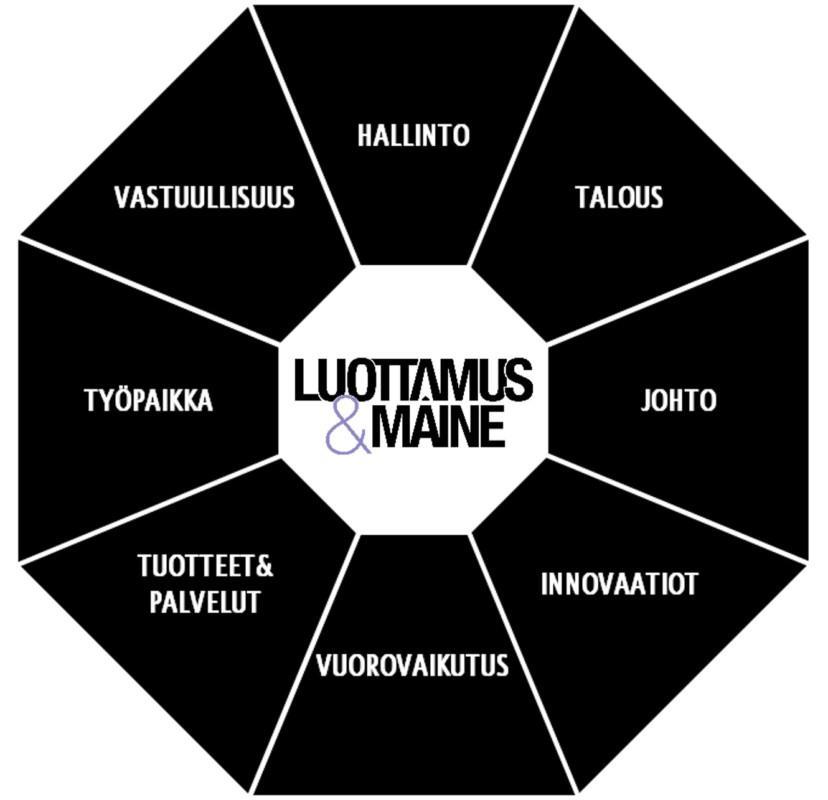
anseende , we measure anseende as distinct entities and conduct data analysis on how anseende components anseende affect, for example, people’s willingness to buy,” explains Riku Ruokolahti.
Let me spell it out: An employer’s image has a direct impact on business, and in some cases, it’s even the single most important factor explaining purchasing decisions! Sometimes we can tell right away from the jaws dropping on the executive team that this came completely out of the blue. After the initial shock, some of the team seem a bit distracted, and the smiling HR director’s tense cheeks seem to say, “What did I tell you?!” The palpable sense of unease stems from the fact that these smart people are reorienting their thinking. Can this be true? What does this mean for what we’re doing?
But it’s not that difficult. I often ease cognitive distress with tangible examples. Would you yourself buy consulting services from a firm that no one wants to work for? Can the best advice really be found at a firm that hires people who can’t find work anywhere else? What if you suddenly need help with a busy project that’s sure to involve a lot of stress and long hours? Would you buy that help from a partner whose employer brand reflects bureaucracy and a rigid culture?
The significance of employer brand for demand depends on the context. In industries that involve service or partnership, employer brand appears to be more significant in our data analyses than in industries where these elements are not prominently present. For example, for a German online retailer selling socks, employer brand may be less significant than for a B2B company that strives to build close partnerships with its customers, and so on.
Riku's Tips for Managing Your Employer Brand:
1. Measure and analyze. Assess the company’s internal—as well as external—organizational reputation through research. It’s important to have a thorough understanding of the company’s reputation. The big picture helps you understand how employees perceive the company from perspectives beyond their actual work. Reputation is a broader concept than job satisfaction.
2. Strengthen and grow. Build on proven strengths and address weaknesses. Grow as an organization and as an employer.
3. Engage and communicate.Share anseende and external results with the entire organization. Base your message on proven strengths. External communication must be aligned with the views of your own team.
Riku Ruokolahti has written a handbook on corporate reputation and its management. The chapter published here, “The Incredible Importance of Employer Image to Business,” can be found in the second section of the handbook: anseende Management.”
[button url=”/trust-reputation/” size=”btn-md” style=”btn-primary” target=””]Learn more about the “ Reputation&Trust ” model[/button] [button url=”https://reptrust.com/maineen-johtamisen-kasikirja-tilaus/” size=”btn-md” style=”btn-secondary” target=””]Order the handbook[/button]